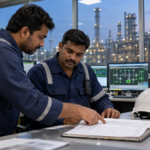
A large industrial plant can have hundreds of activities taking place simultaneously.
Production targets need to be met. Equipment may require attention. Maintenance jobs need permits and access. Operational abnormalities need monitoring. Safety issues need action.
The daily operations meeting provides a regular point at which these competing priorities can be brought together.
A useful operations meeting begins with a clear picture of current plant status.
This typically includes production performance, significant operating conditions, equipment availability, utility constraints and any abnormalities that could affect the day’s activities.
The objective is not to review every plant parameter. It is to identify what requires attention or coordination.
Operations wants equipment available for production. Maintenance needs equipment released so that necessary work can be carried out.
These objectives can sometimes compete.
A daily meeting provides an opportunity to decide which jobs are essential, what equipment can be released, what operational preparation is required and how the work affects production.
This helps prevent maintenance priorities and production priorities from being managed independently.
Work permits, isolations, simultaneous activities and changing plant conditions can all affect how the day’s work is executed.
Safety considerations therefore need to be integrated into operational planning rather than treated as a separate discussion after production decisions have already been made.
If an activity changes the plant’s operating condition or introduces additional risk, everyone affected needs to understand it.
The most effective daily meetings are not simply reporting sessions.
Routine information can often be communicated through existing plant systems and reports. Meeting time is better used for exceptions: equipment that is unavailable, production constraints, abnormal conditions, important maintenance activities and decisions requiring coordination.
Identifying a problem is not enough.
For significant issues, the meeting should establish what action is required, who is responsible and what needs to be followed up.
The next day’s meeting then becomes an opportunity to review progress rather than rediscover the same issue. A well-run daily operations meeting is therefore more than an administrative routine. It creates a common operational picture across functions and helps the plant coordinate production, equipment availability and safe execution of work.