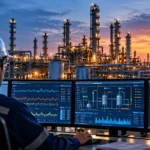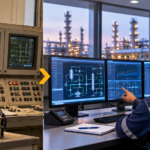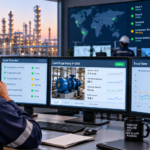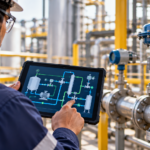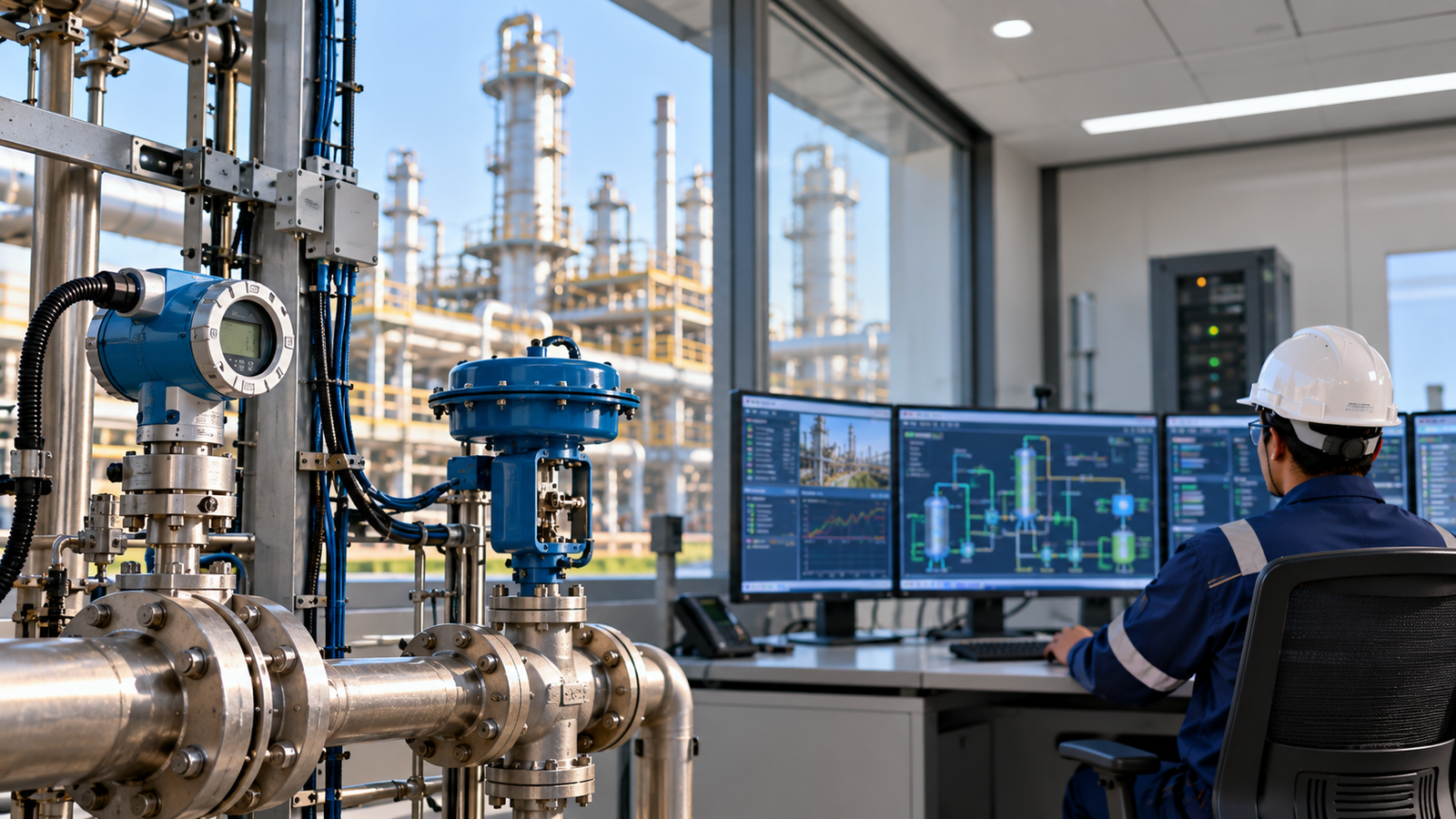
Industrial automation connects what is happening physically in the plant with the systems used to monitor and control it.
A temperature transmitter in the field, a PLC or DCS in the control room, an operator screen and a control valve may all be part of the same control loop.
Understanding that chain helps explain how plant information moves from the process to the people and systems managing it.
Automation begins with field devices.
These may include:
These instruments convert a physical process condition into a signal that the control system can understand.
Field signals are connected to the control system through input/output modules.
Inputs bring information into the system.
Outputs send commands back to the plant.
For example:
flow transmitter → input module → controller → output module → control valve
This is the basic structure behind many automated control loops.
PLCs and DCS systems process the incoming information according to programmed logic or control strategies.
The controller may:
The complexity depends on the process and the function being controlled.
Human-machine interfaces allow operators to see plant conditions.
They may display:
Good automation does not remove the operator.
It gives the operator better information and more consistent control.
Modern plants may use industrial communication networks to move data between:
The network becomes part of the automation infrastructure.
Automation ultimately has to change something in the real process.
That may mean:
The control system therefore connects digital information with physical equipment.
Industrial automation works because several layers function together:
measurement → signal → controller → operator interface → final control element
If any part of that chain is unreliable, the quality of plant control can suffer.