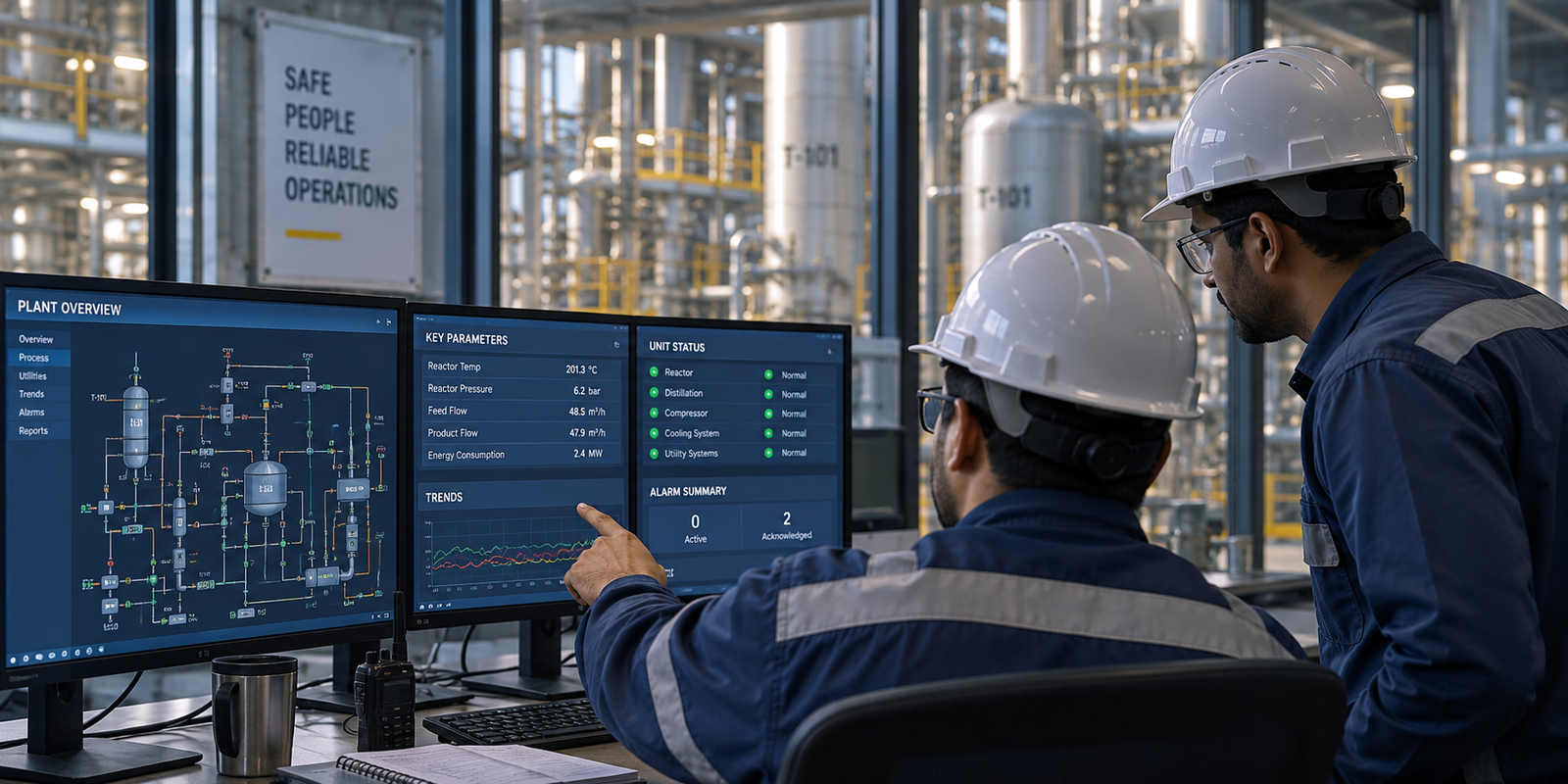
The control room provides operators with a broad view of plant conditions. Field operators provide something equally important: direct observation of what is happening around the equipment and process units.
Safe and stable plant operation depends on the two working together.
A control-room operator may see changes in pressure, temperature, flow, level or other operating parameters.
A field operator may see or hear something that is not immediately obvious from those readings.
Neither perspective should be considered complete on its own.
For example, an unexpected change in an operating parameter may prompt the control room to ask the field operator to verify local conditions. Similarly, an unusual field observation may lead the control room to examine trends or related parameters more closely.
Many field activities affect conditions elsewhere in the plant.
Opening or closing a valve, changing equipment configuration or carrying out an equipment changeover can influence process conditions monitored from the control room.
Clear communication before, during and after such actions helps ensure that everyone understands what is being changed and what response is expected.
This becomes particularly important when several activities are happening simultaneously.
During stable operation, communication patterns can become routine. When an abnormal situation develops, however, the quality of coordination becomes much more important.
The control room may be receiving multiple alarms or observing rapidly changing parameters while field operators investigate physical conditions.
Information needs to move quickly, but it also needs to remain clear.
Field observations should be communicated accurately, and actions requested from the control room should be understood before they are carried out.
Assumptions can create problems in plant operations.
If the control room requests a field action, confirmation that the correct action has been completed closes the communication loop. Similarly, if field conditions differ from what was expected, that information needs to return to the control room.
This simple discipline helps maintain a shared understanding of plant status.
Good control-room and field coordination is not merely a communication issue. It is an operational capability.
Operators need to understand how their actions affect other parts of the plant, know when additional verification is required and communicate changing conditions effectively. A plant may have extensive instrumentation and sophisticated controls, but day-to-day operation still depends heavily on people interpreting information and acting together.