A piping arrangement can be technically correct and still be difficult to build.
Industrial plants are crowded environments where piping competes for space with structures, equipment, cable trays, instruments and access routes.
Construction also introduces practical questions that may not be obvious from a process diagram or 3D model.
This is where constructability becomes important.
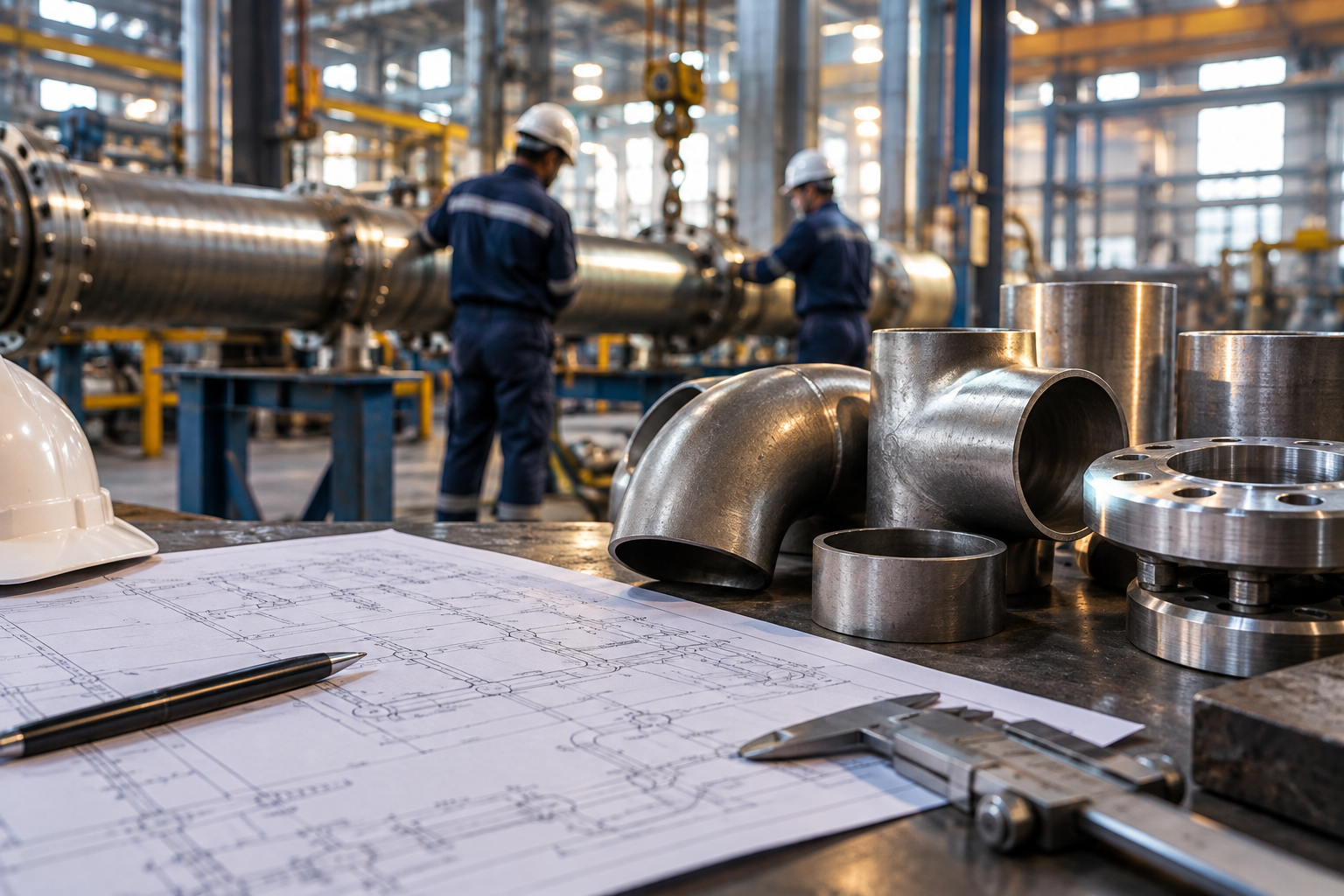
A piping line shown on a model eventually has to become a physical installation.
Pipe spools need to be fabricated, transported, lifted, positioned and connected.
Welds need to be completed and inspected.
The sequence of construction can also determine whether certain areas remain physically accessible.
A route that appears compact and efficient on screen may create difficulties if installers cannot position a spool or reach a field weld.
Space is required for more than the pipe itself.
Valves need room for operation.
Flanges may need to be opened.
Instruments may require calibration.
Insulation increases the physical envelope.
Equipment may eventually need maintenance or removal.
Good piping layout therefore considers not only installation but also the activities that will happen around the piping throughout the operating life of the plant.
Piping rarely occupies a plant area on its own.
Structural steel, electrical cable trays, instrumentation, HVAC, equipment and civil structures all compete for space.
Modern 3D design systems allow many clashes to be identified before construction.
But a clash-free model is not automatically a constructable design.
Engineers still need to think about access, installation sequence, construction tolerances and practical field conditions.
Constructability becomes particularly challenging when modifying an existing plant.
Space may already be severely restricted.
Existing drawings may not perfectly represent current site conditions.
New piping has to connect to assets that are already operating or are available only during limited shutdown windows.
Site surveys and field verification therefore become essential.
In brownfield engineering, a slightly less elegant route may sometimes be a more practical solution.
Poor constructability often results in field modifications.
Some field changes are unavoidable, but excessive changes can increase cost, delay construction and create a gap between engineering documents and what is actually installed.
Considering constructability early helps reduce this risk.
It also improves communication between engineering, fabrication and construction teams.
Constructability does not replace engineering requirements.
A piping system still needs to satisfy process, mechanical and safety requirements.
But those requirements need to be translated into something that can physically be fabricated and installed.
The best piping designs work both on the engineering model and in the real plant. That is why constructability should be considered throughout design—not only when construction begins.