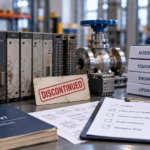
Maintenance stores exist to make parts available when the plant needs them.
But more inventory does not automatically mean better maintenance support.
Excess stock ties up working capital, consumes warehouse space and can become obsolete.
Too little stock can extend maintenance downtime.
The challenge is finding the right balance.
Historical usage is one of the most useful starting points.
Stores teams can review:
This helps distinguish regularly used items from rarely required parts.
Many plants establish minimum and maximum stock levels.
When inventory reaches the minimum level, replenishment is triggered.
The maximum level helps prevent overstocking.
These values should reflect actual demand and lead time rather than remain unchanged for years.
Industrial warehouses often accumulate items that have not been used for long periods.
Some may still be strategically important.
Others may no longer be required because equipment has been modified or replaced.
Slow-moving inventory should therefore be reviewed rather than automatically treated as unnecessary.
A spare that appears available in the system but cannot be found physically provides no operational protection.
Inventory records need to match actual stock.
Good warehouse discipline includes:
Long-held stock may become unusable because:
Inventory therefore needs periodic technical review, not just financial review.
Higher inventory levels improve the probability that a required part will be immediately available.
But every additional item increases carrying cost.
The optimum inventory level depends on the value of availability relative to the cost of holding stock.
Good MRO inventory management does not aim to keep everything.
It aims to ensure that the right parts are available when needed while avoiding unnecessary inventory.