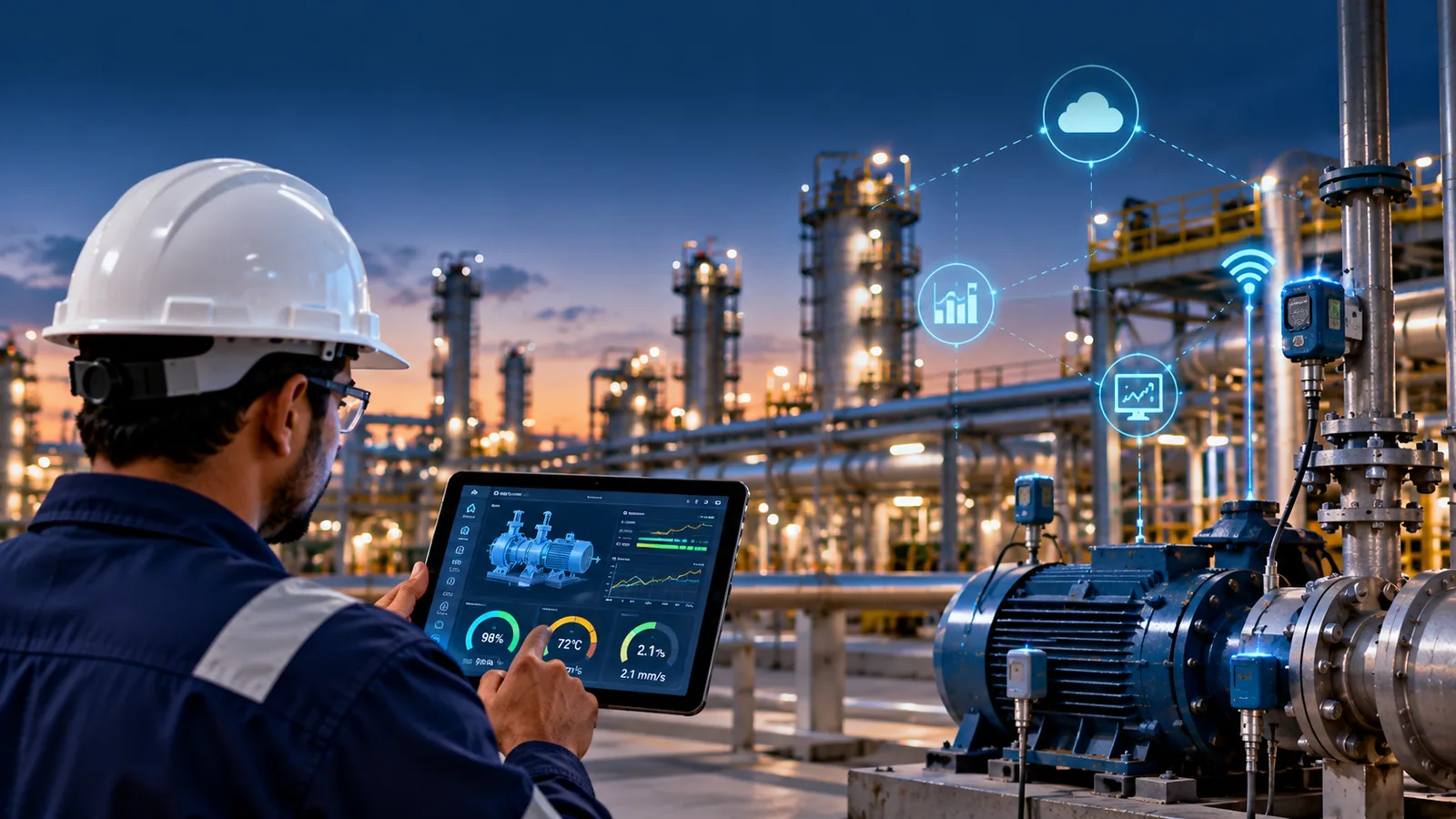
Industrial plants are generating more data than ever before.
Sensors, machines, control systems, cameras and connected devices continuously produce information about equipment condition, process performance and plant activity.
Traditionally, much of this data has been sent to central servers or cloud platforms for processing.
But some industrial applications need decisions to be made faster, closer to where the data is created.
That is where edge computing comes in.
Edge computing refers to processing data near the equipment or process rather than sending everything to a distant data centre or cloud platform.
The processing may happen in:
The idea is simple: analyse important information close to the source, then send only the relevant results elsewhere.
Industrial facilities can generate enormous volumes of data.
A vibration sensor collecting high-frequency signals, for example, can produce far more information than a plant needs to store permanently.
Sending every data point to the cloud can create challenges related to:
Edge computing allows part of that analysis to happen locally.
The plant can then transmit alarms, trends or summarised information rather than the full raw data stream.
Some industrial applications cannot wait for data to travel to an external system and back.
If an application is being used to detect abnormal vibration, overheating or another rapidly developing equipment condition, response time can matter.
Processing the data locally can reduce delay.
This can be especially useful where equipment protection or operational decisions depend on near-real-time information.
Condition-monitoring applications are one of the areas where edge computing can be useful.
Sensors may collect information such as:
An edge device can analyse the data close to the equipment and identify patterns or abnormal behaviour.
Instead of continuously sending large raw datasets to a remote system, it can transmit selected events or health indicators.
Cloud-based systems depend on reliable connectivity.
Industrial plants may not always have continuous high-bandwidth communication across every operating area.
Some facilities are remote.
Others contain equipment in locations where wireless connectivity is difficult.
Edge computing allows certain applications to continue operating even if communication with an external platform is temporarily interrupted.
Once connectivity is restored, selected data can be synchronised with higher-level systems.
Edge computing does not necessarily replace cloud computing.
In many industrial applications, the two work together.
The edge may handle:
The cloud or central platform may handle:
The most effective architecture depends on where each type of processing makes the most sense.
Moving computing closer to equipment creates additional devices that need to be managed securely.
Edge devices can become part of the plant’s operational technology environment.
Plants therefore need to consider:
Adding intelligence to the edge should not mean adding unmanaged devices to the plant network.
Industrial computing equipment may need to operate in harsher environments than conventional office IT hardware.
Depending on location, devices can be exposed to:
Hardware selection therefore needs to reflect the actual installation environment.
Reliability of the computing infrastructure becomes important because applications may depend on continuous local processing.
Industrial cameras can generate large amounts of image data.
Applications such as quality inspection, safety monitoring or equipment observation may require rapid image processing.
Rather than continuously transmitting high-resolution video to a remote location, edge systems can analyse images locally.
Only relevant results or selected images may then be sent to another system.
This can reduce bandwidth requirements significantly.
Some artificial-intelligence models can be deployed directly on edge devices.
This allows the plant to apply analytics near the source of the data.
Possible applications include:
However, running AI at the edge still depends on good data, suitable hardware and reliable model management.
It does not remove the need for engineering judgement.
The technology itself is only one part of an edge-computing project.
Industrial plants usually contain equipment and control systems from many generations and vendors.
Connecting new edge devices to existing systems can therefore be challenging.
Projects may need to address:
A technically capable device provides limited value if it cannot integrate reliably with the plant environment.
Edge computing should not be introduced simply because it is a new technology.
The plant should first identify the operational problem.
For example:
Once the requirement is clear, engineers can decide whether edge computing is actually the right solution.
As industrial plants become more connected, the amount of data generated at equipment level will continue to grow.
Sending every piece of information to a central or cloud system is not always practical.
Edge computing gives plants another option: process selected data where it is created, respond locally when speed matters and send higher-level information onward when needed.
For industrial facilities, the value of edge computing will not come from placing more computers around the plant.
It will come from deciding which decisions need to happen close to the equipment and which can happen somewhere else.