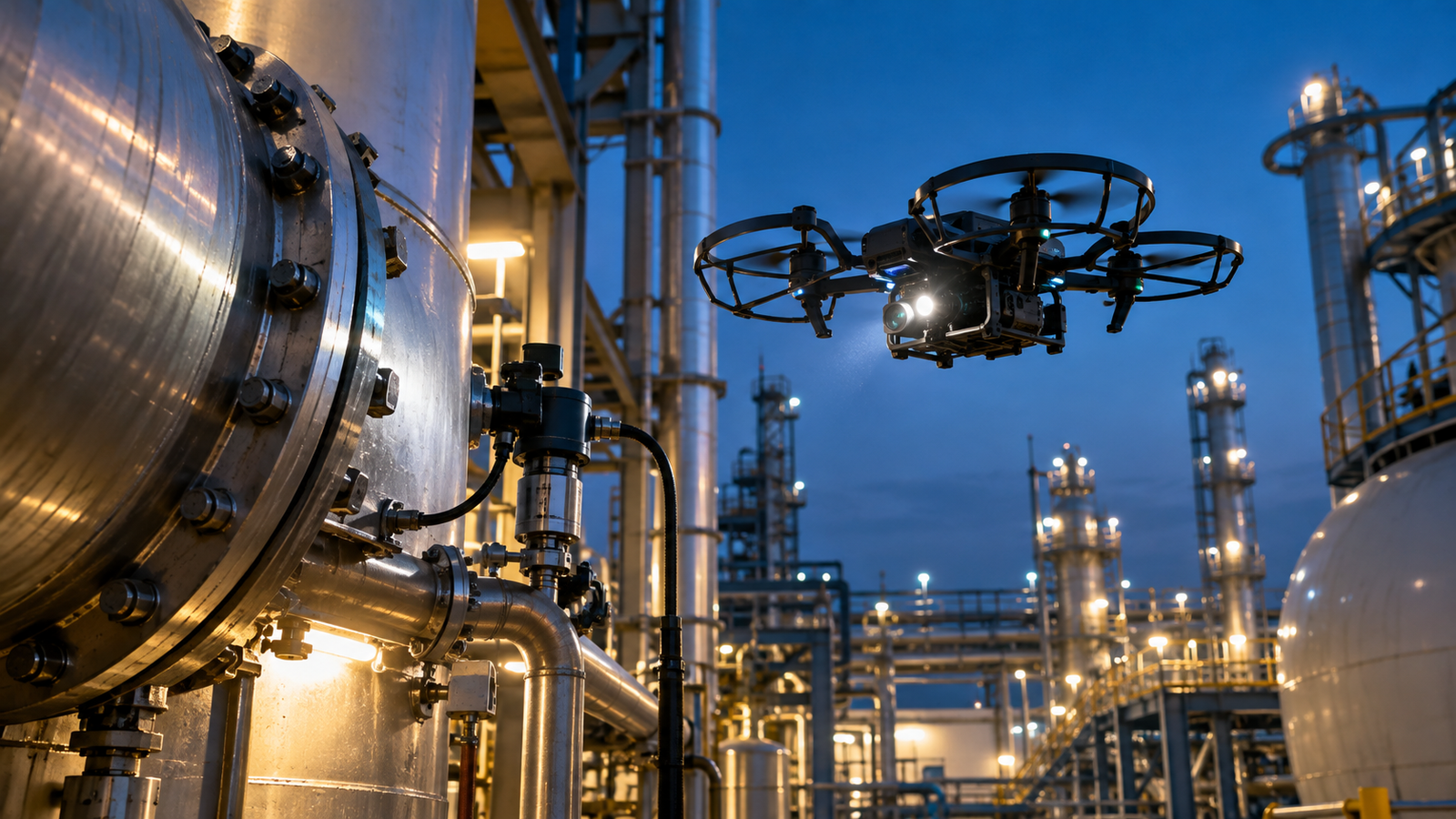
Inspecting industrial facilities often means reaching difficult locations.
Stacks, storage tanks, roofs, flare structures, pipe racks and elevated equipment may require scaffolding, rope access or shutdown preparation.
Drones can provide another way to inspect some of these areas.
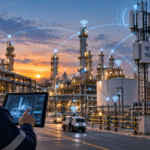
A drone equipped with a camera can inspect external surfaces without requiring a person to climb to the same location.
This can be useful for:
The plant can collect visual information while reducing access requirements.
Traditional access methods may require:
A drone inspection may sometimes be deployed more quickly.
This can make it useful for preliminary assessment or routine visual checks.
Industrial drones can carry more than conventional cameras.
Depending on the application, payloads may include:
These tools can provide information that is difficult to obtain from ground level.
A camera image cannot always determine material condition.
If wall thickness, cracking or internal damage needs to be assessed, additional inspection techniques may still be required.
Drones are therefore often most useful as part of a broader inspection strategy.
Industrial facilities can create challenges such as:
Flight planning and operator competence remain important.
A single inspection can produce large quantities of images and video.
The value comes from being able to compare findings over time and identify meaningful changes.
Good inspection records therefore matter as much as the flight itself.
Drones are most valuable when they help plants inspect areas more safely, more frequently or with better visibility.
They expand access—but they do not remove the need for engineering interpretation.