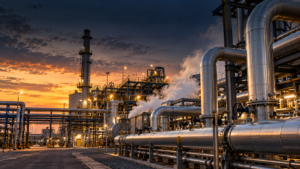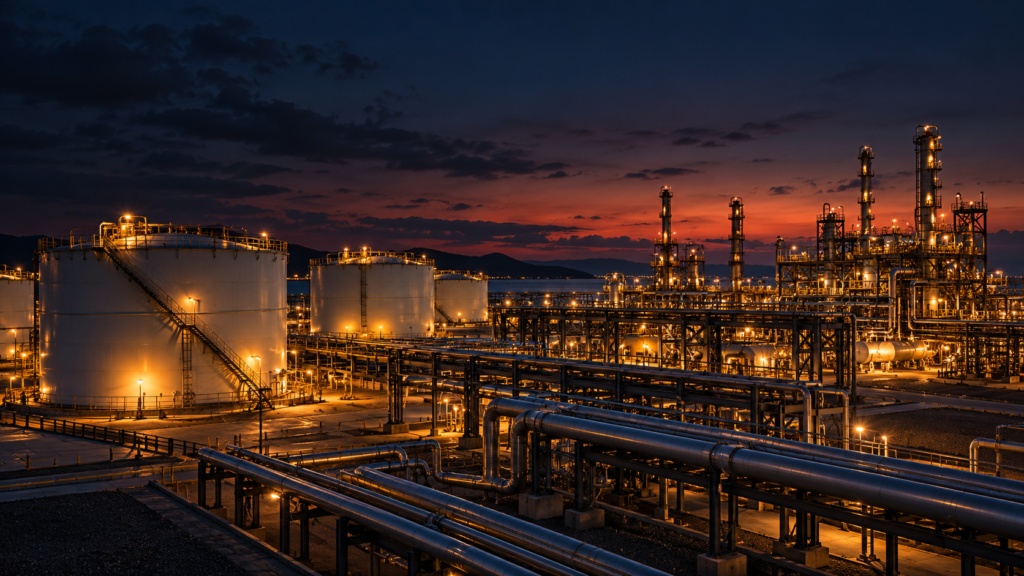
Walk through a refinery, chemical plant or large process facility and one of the most visible areas is often the tank farm.
Large cylindrical storage tanks may appear relatively simple compared with reactors, compressors or complex process units, but they form an important link between incoming materials, production units and product dispatch.
More Than Just Storage
Industrial plants rarely receive and consume materials at exactly the same rate.
Storage tanks create a buffer between different stages of the operation. They may hold raw materials arriving by pipeline, road tanker or ship; intermediate products waiting for further processing; or finished products before dispatch.
This storage capacity helps plants manage changes in production rates, supply interruptions and logistics schedules without immediately affecting the process units.
Different Products Need Different Tanks
The type of tank depends on the material being stored.
Atmospheric tanks are commonly used for many liquid products, while other services may require pressure vessels or specialised storage systems.
Tank design also considers factors such as vapour generation, corrosion, temperature, product contamination and fire risk.
For plant teams, choosing the correct storage arrangement is therefore closely connected with both process requirements and safety.
Moving Product In and Out
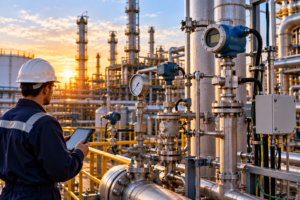
A tank farm is connected to the rest of the plant through extensive piping, pumps, valves and instrumentation.
Operators must know which tank is receiving material, which is supplying a process unit and which lines are available for product transfer.
Incorrect valve alignment or transfer routing can result in contamination, overfilling or sending material to the wrong destination.
This is why tank-farm operations depend heavily on clear procedures and accurate communication.
Monitoring Level and Condition
Tank level is continuously monitored to prevent both overfilling and unexpected loss of inventory.
Temperature, pressure and other parameters may also be monitored depending on the stored product.
Many facilities use independent high-level alarms or shutdown systems as additional protection against overfill events.
An Important Part of Plant Operations
Tank farms may sit away from the main processing units, but they are closely connected with day-to-day plant performance.
Production cannot continue for long if raw-material storage becomes unavailable or finished-product tanks reach capacity.
Behind the rows of storage tanks is therefore a carefully managed system of inventory, transfer, instrumentation and operating discipline that helps keep the entire plant moving.