Steam is often produced in one part of an industrial plant and consumed in dozens — sometimes hundreds — of locations across the facility.
It may provide heat to process equipment, support distillation and evaporation, warm storage tanks or serve other essential plant duties.
The result is an extensive network that quietly transfers energy throughout the plant.
Where Steam Comes From
Steam is typically generated in boilers or other heat-recovery systems.
Water is heated until it becomes steam at the pressure and temperature required by the plant.
Large facilities may operate several steam-pressure levels because different processes require different conditions.
Once generated, steam enters the plant distribution network.
Moving Steam Around the Plant
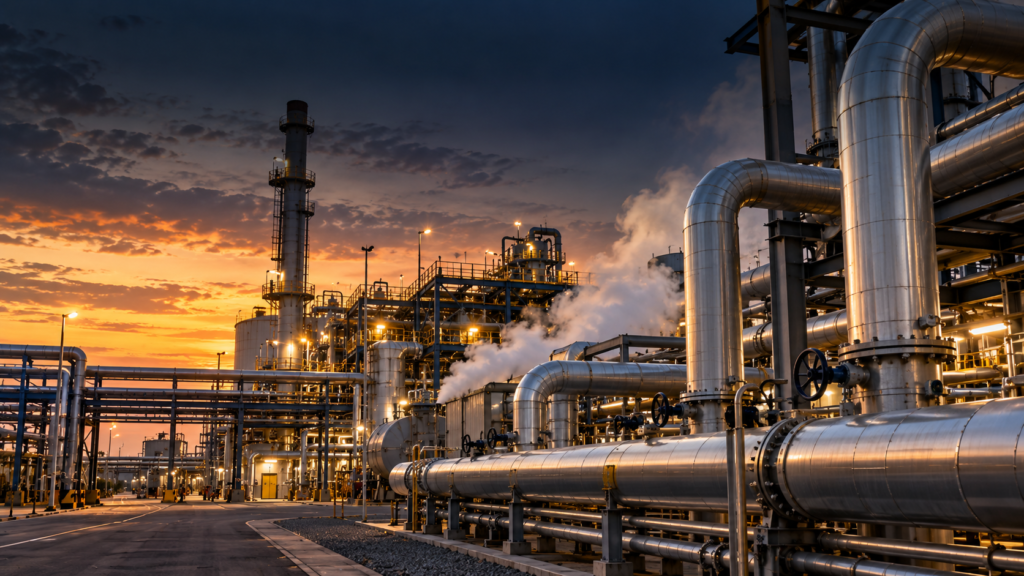
Steam travels through insulated piping to different process areas.
Because steam lines operate at high temperatures, the piping system must account for thermal expansion. Supports, expansion arrangements and drainage therefore play an important role in maintaining reliability.
Poor insulation can also waste significant amounts of energy before the steam reaches the equipment that needs it.
What Happens at the Equipment
At the point of use, steam transfers its heat to another process.
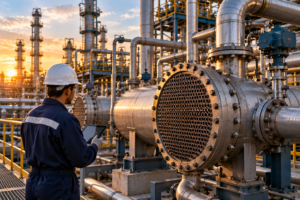
This may occur in heat exchangers, reboilers, vessels, tracing systems or other equipment.
As steam gives up its heat, it condenses back into water.
That condensate still contains valuable thermal energy and is often collected rather than discarded.
Returning Condensate
Condensate-return systems send recovered water back toward the boiler system.
Recovering condensate reduces the amount of fresh water that must be treated and reheated, improving both energy and water efficiency.
Steam traps are an important part of this system. They allow condensate and non-condensable gases to leave steam equipment while limiting the loss of live steam.
A failed steam trap may appear to be a small maintenance issue, but across a large plant multiple failures can create significant energy losses.
A Utility That Connects the Plant
Steam systems extend across process units, utility areas and storage facilities.
Their performance depends on boilers, piping, insulation, valves, steam traps, condensate recovery and careful operating control working together.
Most of the system operates quietly in the background. But when steam pressure falls or distribution becomes unreliable, the effects can quickly appear across multiple areas of the plant.
That makes the steam network one of the less visible — but essential — systems keeping industrial production running.