People | Processes | Performance
inside the industrial plant

Day: September 20, 2026

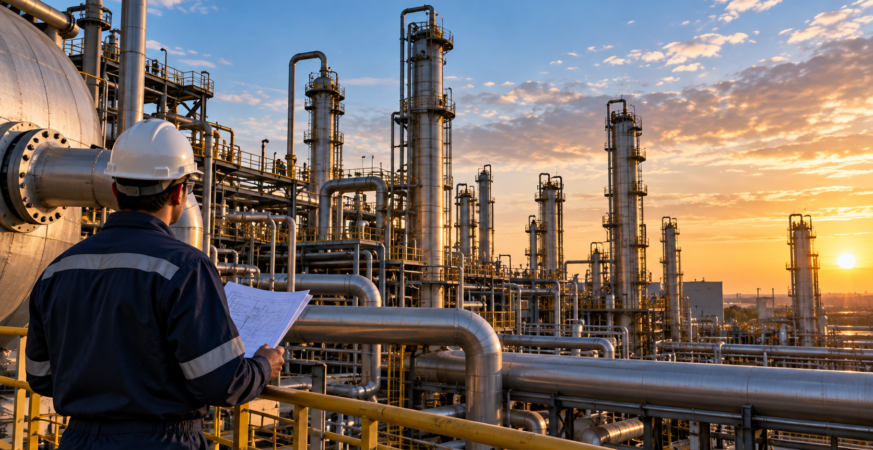
Industrial process unit with distillation columns and piping at sunset
Plant Operations

Why Shift Handovers Matter in Continuous Process Plants

Industrial plants rarely stop when a shift ends. Production continues, equipment remains in service and operating conditions can change while one team hands responsibility to another. This makes the shift handover one of the most important routine activities in plant operations. A good handover is more than a summary of what happened during the previous […]

Plant Operations

The Daily Operations Meeting: How Plants Align Production, Maintenance and Safety

A large industrial plant can have hundreds of activities taking place simultaneously. Production targets need to be met. Equipment may require attention. Maintenance jobs need permits and access. Operational abnormalities need monitoring. Safety issues need action. The daily operations meeting provides a regular point at which these competing priorities can be brought together. Start With […]

Plant Operations

Operating Discipline: Why Consistency Matters on the Plant Floor

Industrial plants depend on sophisticated equipment and engineered systems, but reliable operation also depends on something much simpler: performing routine activities consistently. This is the basis of operating discipline. Operating discipline means carrying out plant activities according to established procedures, operating limits and responsibilities—even when production is stable and the task has been performed hundreds […]

Plant Operations

Managing Utility Constraints Without Disrupting Plant Operations

Steam, cooling water, compressed air, power and other utilities support production across an industrial plant. Under normal conditions, operators may rarely need to think about their availability beyond routine monitoring. But when utility capacity becomes constrained, the effect can spread rapidly across several process units. For operations teams, the challenge is to manage that constraint […]

Plant Operations

Managing Production When Critical Equipment Becomes Unavailable

Not every equipment problem requires a plant shutdown. Industrial plants are often designed with standby equipment, alternative operating arrangements or some ability to continue production at reduced capacity. But when an important piece of equipment becomes unavailable, operations teams need to determine how the plant can continue operating safely. The immediate question is not necessarily […]

Plant Operations

Control Room and Field Operators: Why Coordination Matters

The control room provides operators with a broad view of plant conditions. Field operators provide something equally important: direct observation of what is happening around the equipment and process units. Safe and stable plant operation depends on the two working together. Two Views of the Same Plant A control-room operator may see changes in pressure, […]

Process Engineering

Understanding Process Debottlenecking: Where Engineers Look for Capacity Constraints

Industrial plants are often asked to produce more from assets that were designed years earlier. Building a new production line or expanding an entire facility may not always be practical, so engineers first look at whether additional capacity can be achieved from the existing process. This is where process debottlenecking comes in. Debottlenecking is the […]

Process Engineering

Process Simulation: Where It Helps — and Where Engineering Judgement Still Matters

Process simulation allows engineers to create a mathematical representation of an industrial process. Using information about materials, operating conditions and equipment behaviour, simulation tools can estimate how a process may respond under different conditions. They have become an important part of modern process engineering, but they do not eliminate the need for engineering judgement. Building […]

Process Engineering

How Engineers Evaluate Changes in Process Conditions

Industrial processes rarely operate under exactly the same conditions throughout their entire life. Feed composition may change. Production demand may increase. Product specifications can evolve. Utilities may operate differently from the original design basis. Even apparently modest changes can affect several parts of a process. That is why process engineers need to evaluate the consequences […]

People | Processes | Performance

inside the industrial plant 

© 2026 The Plant Insider. All rights reserved.