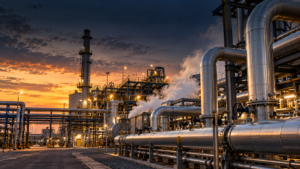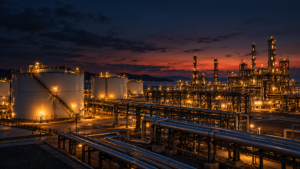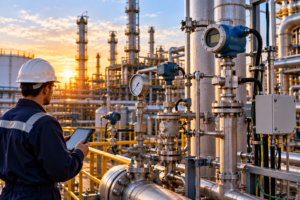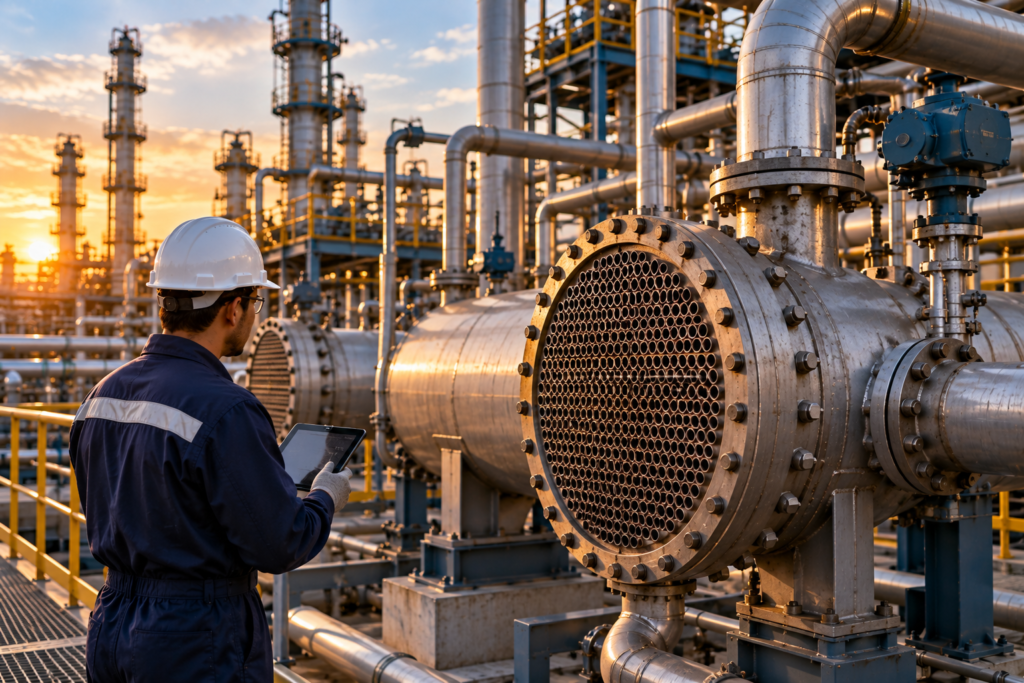
A modern industrial plant may contain thousands of instruments, valves, motors, pumps and other pieces of equipment. The control room is where much of this activity is monitored and coordinated.
From one central location, operators can see what is happening across the plant, respond to changing conditions and help keep production within safe operating limits.
What Happens in a Control Room?
The control room brings together information from different parts of the plant.
Sensors and instruments continuously measure conditions such as:
- Pressure
- Temperature
- Flow
- Liquid level
- Equipment status
- Motor operation
- Valve position
This information is transmitted to the plant’s control system and displayed on operator screens.
Operators use these displays to understand current plant conditions and identify changes that may require attention.
The Role of the Control System
Many process plants use a Distributed Control System (DCS) to monitor and control production.
The DCS receives signals from field instruments and can send commands back to equipment such as control valves, pumps and motors.
For example, if the temperature in a process moves away from its required range, the control system may adjust a control valve or another operating parameter to bring the process back towards the desired condition.
Some facilities also use SCADA systems, particularly where operations are spread across large areas, such as pipelines, utilities and water networks.
Operators Still Matter
Automation does not mean a plant runs without people.
Control-room operators monitor trends, respond to alarms, coordinate with field teams and make operating decisions.
They also need to understand how different parts of the process interact.
A change in pressure, temperature or flow in one part of the plant may affect equipment somewhere else. Operators therefore look at the overall behaviour of the process, not simply individual readings.
Alarms and Abnormal Conditions
Control systems generate alarms when process variables or equipment conditions move outside defined limits.
An alarm may indicate high pressure, low flow, abnormal temperature, equipment failure or another condition requiring attention.
Operators must assess what is happening and determine the appropriate response.
This is also why alarm management matters. Too many unnecessary alarms can make it harder for operators to identify the conditions that genuinely require immediate action.
Control Room and Field Operations
The control room does not operate in isolation.
Field operators inspect equipment, verify local conditions, operate manual equipment and communicate with the control room.
For example, a control-room operator may notice an unusual pump reading and ask a field operator to physically inspect the equipment.
Combining digital information with direct observation helps plant teams understand what is actually happening in the field.
Using Trends and Historical Data
Control systems also record operating data over time.
Instead of looking only at a current pressure or temperature reading, operators and engineers can examine trends to see how conditions have changed.
Historical data can help identify recurring problems, unstable operating conditions or equipment behaviour that may not be obvious from a single reading.
Maintenance and reliability teams can also use this information when investigating equipment performance.
Safety Systems
Critical industrial facilities may have dedicated safety systems that operate separately from normal process control.
If certain dangerous conditions develop, these systems can automatically take protective action, such as shutting down equipment or moving the process towards a safer condition.
They provide an additional layer of protection when normal process controls are no longer sufficient.
The Bottom Line
The control room is often described as the nerve centre of an industrial plant.
It brings together information from equipment across the facility and gives operators the tools to monitor production, respond to changes and coordinate plant operations.
But technology is only part of the picture.
Effective plant control depends on the combination of reliable instrumentation, automation systems, field equipment and experienced people making informed operating decisions.