A control system can calculate exactly what a process needs.
But at some point, something in the physical plant has to change.
A valve may open or close to alter flow.
That change may affect pressure, level, temperature or another process variable.
This is why the control valve sits at an important intersection between instrumentation, control logic and the process itself.
In many process-control loops, a transmitter measures a variable and sends that information to the control system.
The controller compares the measurement with the desired operating target and determines what action is required.
The control valve then converts that signal into a physical change in the process.
Its performance therefore has a direct effect on the quality of the control loop.
A control valve should be capable of handling the required flow across expected operating conditions.
A valve that is too small may not provide sufficient capacity.
A valve that is excessively large may spend much of its operating life very close to the closed position, potentially making stable control more difficult.
Correct sizing therefore considers more than maximum flow.
Engineers need to understand the range of operating conditions the valve will experience.
A control valve works by creating a controlled restriction in the process.
This means pressure conditions across the valve matter.
Excessive pressure drop can create problems depending on the fluid and application.
Cavitation, flashing, noise and high velocity are among the phenomena that may need consideration.
The valve should therefore be selected as part of the process system, not just from the required pipe size.
Different valve designs and trims can provide different relationships between valve position and flow.
The appropriate characteristic depends on how the valve interacts with the wider process system.
This is one reason control-valve selection requires coordination between instrumentation and process engineering.
The valve needs to behave predictably across the operating range relevant to the control loop.
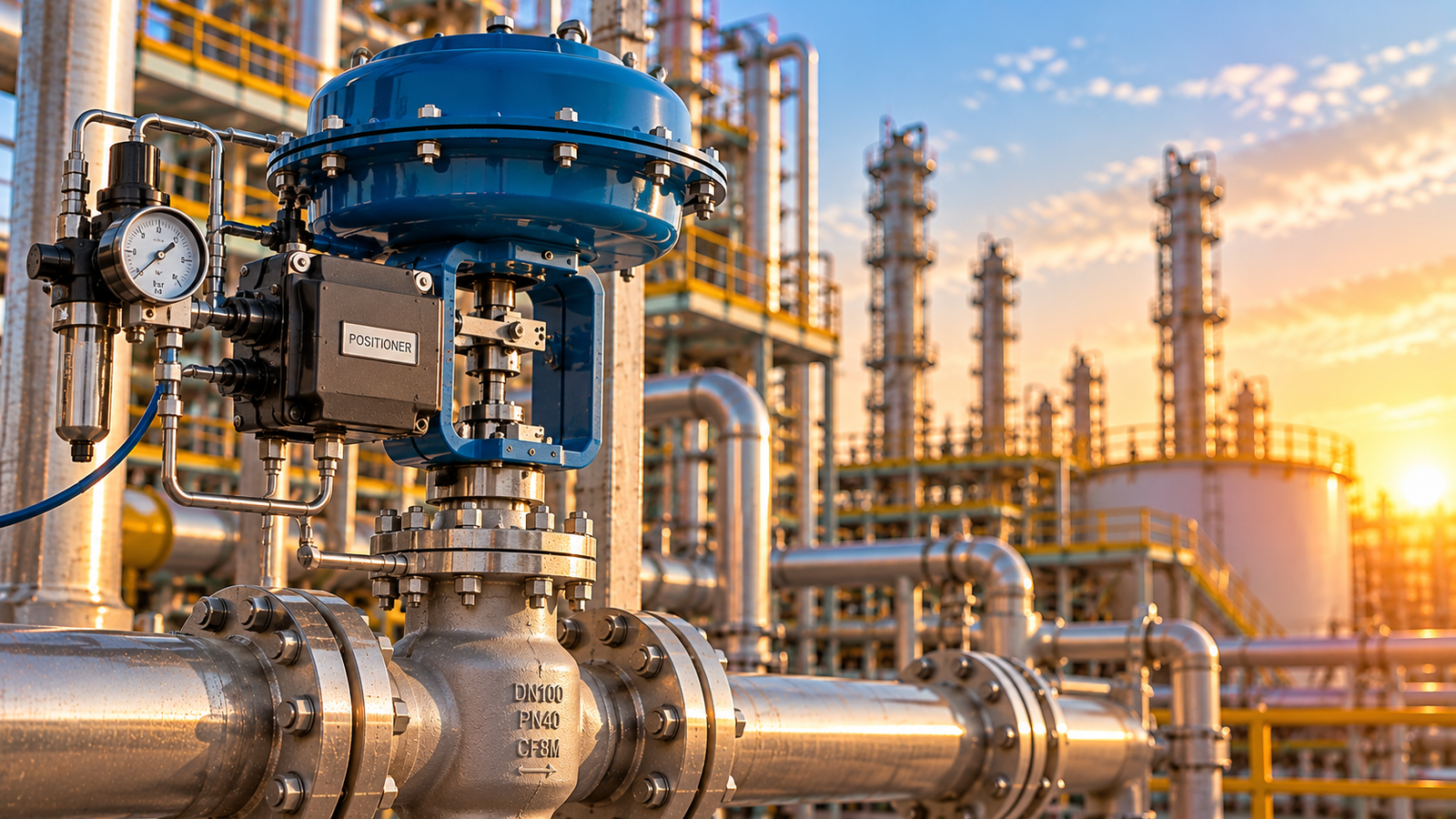
The valve body is only one part of the control-valve assembly.
The actuator provides the force required to move the valve.
The positioner helps ensure that the valve reaches the position requested by the control system.
Poor actuator sizing, friction, mechanical problems or positioner issues can affect valve response and therefore the quality of process control.
Over time, control valves can experience wear, leakage, sticking or changes in mechanical condition.
A valve that no longer responds smoothly can cause oscillation or poor control even when the controller itself is correctly tuned.
This makes valve condition an important part of control-loop performance.
Control valves are sometimes discussed as instrumentation devices and sometimes as mechanical equipment.
In reality, they sit between the two.
They are physical components operating in process piping, but they are also an essential part of the control system.
That is exactly why they belong in Instrumentation & Control.
They are where a control decision becomes a real change in plant operation.