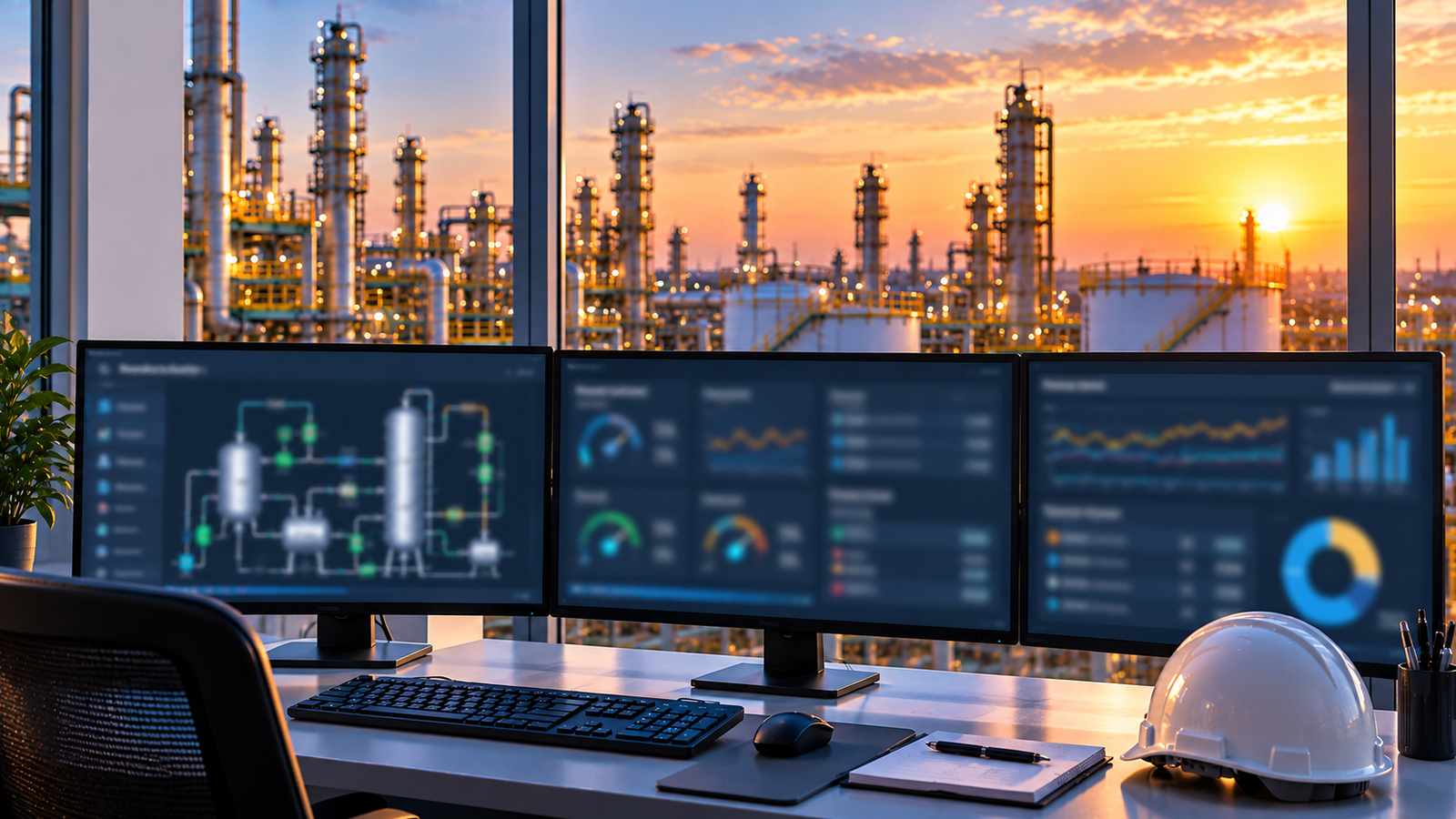
An operator in a control room may see thousands of process values on screens.
Pressure.
Temperature.
Flow.
Level.
Valve position.
Equipment status.
But each value begins somewhere in the physical plant.
Understanding how information travels from the field to the control room helps explain how instrumentation and control systems work together.
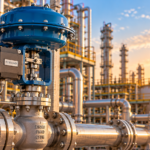
A field instrument senses a physical process condition.
A pressure transmitter may detect pressure.
A temperature element detects temperature.
A flowmeter measures fluid movement.
The device converts that physical condition into a signal that can be transmitted to the control system.
The measurement is therefore the first link in the information chain.
Industrial plants use different methods to transmit instrument information.
Traditional analogue signals remain common.
Digital communication is also widely used.
The exact method depends on the plant architecture, technology and application.
Regardless of the communication method, the objective is the same: move reliable information from the field device to the system that will use it.
The instrument signal eventually reaches an input system associated with the plant control architecture.
There, the raw field information is interpreted and made available to control logic and operator displays.
The control system can then compare measurements with targets, generate alarms or initiate control actions.
This is where individual field measurements become part of a larger operating picture.
In an automatic control loop, the system evaluates the measured value against the required target.
If a difference exists, the controller calculates an appropriate response.
That response may be sent to a control valve, variable-speed drive or another final control element.
The loop then repeats continuously.
Measurement, decision and action form a cycle.
A control room does not simply display thousands of isolated values.
Information needs to be organised so operators can understand the condition of the plant.
Trends help show how variables are changing over time.
Alarms draw attention to abnormal conditions.
Graphics show relationships between equipment and process variables.
Good control-room information therefore depends not only on instrumentation but also on how data is presented and interpreted.
A control system cannot correct unreliable input automatically.
If a transmitter drifts, an impulse line blocks or an instrument fails, the control room may receive information that does not accurately represent the process.
This is why field instrumentation quality remains critical even in highly digital plants.
Advanced software cannot compensate for every bad measurement.
Modern plants increasingly use digital tools, analytics and advanced control.
But these systems still depend heavily on what is happening at the field level.
The journey from sensor to control room is therefore one of the most important links in plant operation.
It connects the physical process with the systems and people responsible for monitoring and controlling it.
And that connection begins with a reliable measurement.