Industrial plants depend heavily on electrical power.
But the incoming supply is not always guaranteed.
Grid disturbances, electrical faults and internal failures can interrupt normal power.
For some plant functions, even a short interruption can create operational or safety problems.
This is why industrial facilities often include several layers of backup power.
The first step is to identify which loads are essential.
Critical loads may include:
Other loads may be allowed to stop during a major electrical interruption.
This distinction helps determine the backup-power philosophy.
Uninterruptible Power Supply systems can provide power almost instantly when the normal source is lost.
They are commonly used for loads that cannot tolerate interruption, such as control and communication systems.
UPS capacity is limited, so it is normally reserved for selected critical loads.
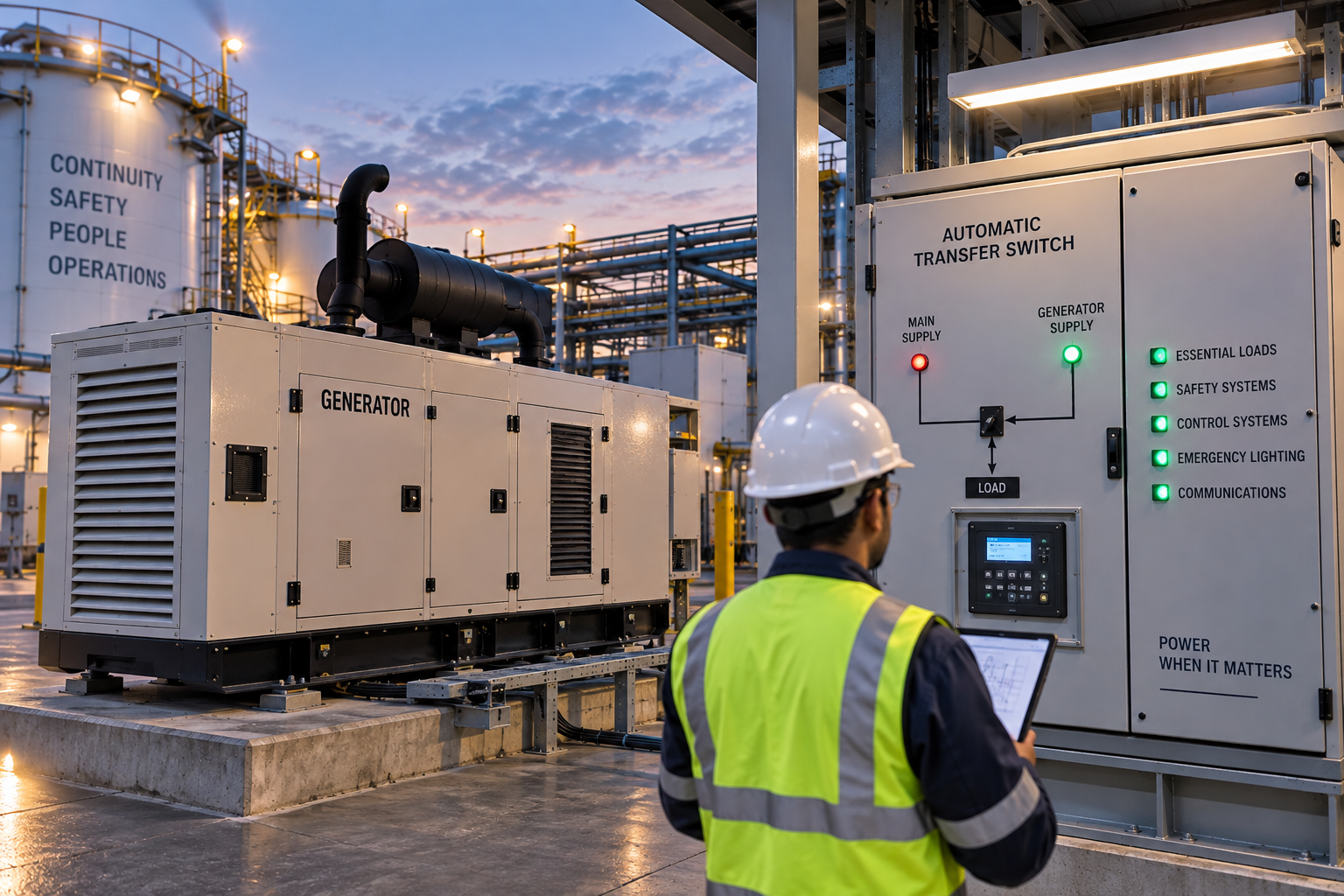
Diesel or gas-powered generator sets can support plant loads for longer periods.
However, they require time to start and reach operating conditions.
The electrical system therefore needs a defined sequence for transferring essential loads to the backup source.
Critical loads are often grouped into dedicated essential or emergency distribution systems.
This allows backup sources to support the loads that matter most without trying to power the entire facility.
The arrangement also helps ensure that non-essential loads do not consume limited backup capacity.
Backup systems are only useful if they operate when required.
Plants therefore need to verify generators, UPS systems, batteries, transfer arrangements and associated controls.
The maintenance aspects belong under TPI’s Maintenance section, but the ability to test and isolate these systems begins with sound electrical design.
Emergency power is not about recreating the entire normal electrical system.
It is about identifying the plant functions that must continue and ensuring that those loads have a reliable alternative source.