Industrial plants depend on a continuous supply of electricity to keep process equipment, control systems, safety systems and utilities operating.
When the main power supply fails, the impact can be immediate. Pumps stop, motors trip, instruments may lose power and process conditions can begin to change quickly.
For this reason, many plants use emergency power systems to keep critical loads operating long enough to protect people, equipment and the process.
One of the first decisions in emergency-power design is identifying which loads are genuinely critical.
A plant may contain hundreds or thousands of electrical loads, but only some require backup during a power failure.
Typical emergency loads can include:
Critical control and instrumentation systems
Emergency lighting
Fire and gas systems
Selected pumps and fans
Communication systems
Shutdown and safety systems
Essential utilities
Control-room systems
The objective is not usually to keep the entire plant running normally.
It is to maintain the equipment and systems needed to bring the plant to a safe condition or support controlled operation during the interruption.
Emergency power can come from several sources depending on how quickly the load must be restored and how long it needs to remain available.
Common systems include:
These systems do not perform the same function.
A generator may provide power for an extended period, but it requires time to start and reach operating conditions.
A UPS can provide electricity almost immediately, making it suitable for loads that cannot tolerate even a short interruption.
Battery-backed DC supplies are also widely used for protection, control and emergency functions.
The acceptable interruption time depends on the equipment being supplied.
Some loads can remain without power for several seconds while a generator starts.
Others cannot.
Control systems, protection systems and certain instrumentation may need continuous supply.
Emergency-power design therefore considers how quickly each load needs to be restored.
This is why plants often use a combination of backup systems rather than relying on a single source.
Emergency systems are usually designed to respond automatically when the normal supply fails.
An automatic transfer arrangement detects the loss of incoming power and initiates the required sequence.
This may involve:
The sequence must prevent unsafe connections between power sources and ensure that the emergency supply is stable before loads are transferred.
Emergency generators and backup systems are normally sized for selected loads rather than the full electrical demand of the plant.
This makes load prioritisation essential.
Some equipment may be restored immediately, while other loads remain disconnected.
In certain systems, loads can also be added in stages to avoid placing a sudden large demand on the emergency generator.
This controlled loading helps maintain voltage and frequency during the transition.
A UPS provides temporary power without the interruption associated with starting a generator.
It is commonly used for:
The UPS bridges the gap between the loss of normal supply and the availability of another power source.
Battery condition is therefore critical.
A UPS may appear healthy during normal operation but fail to provide the required backup if batteries have degraded.
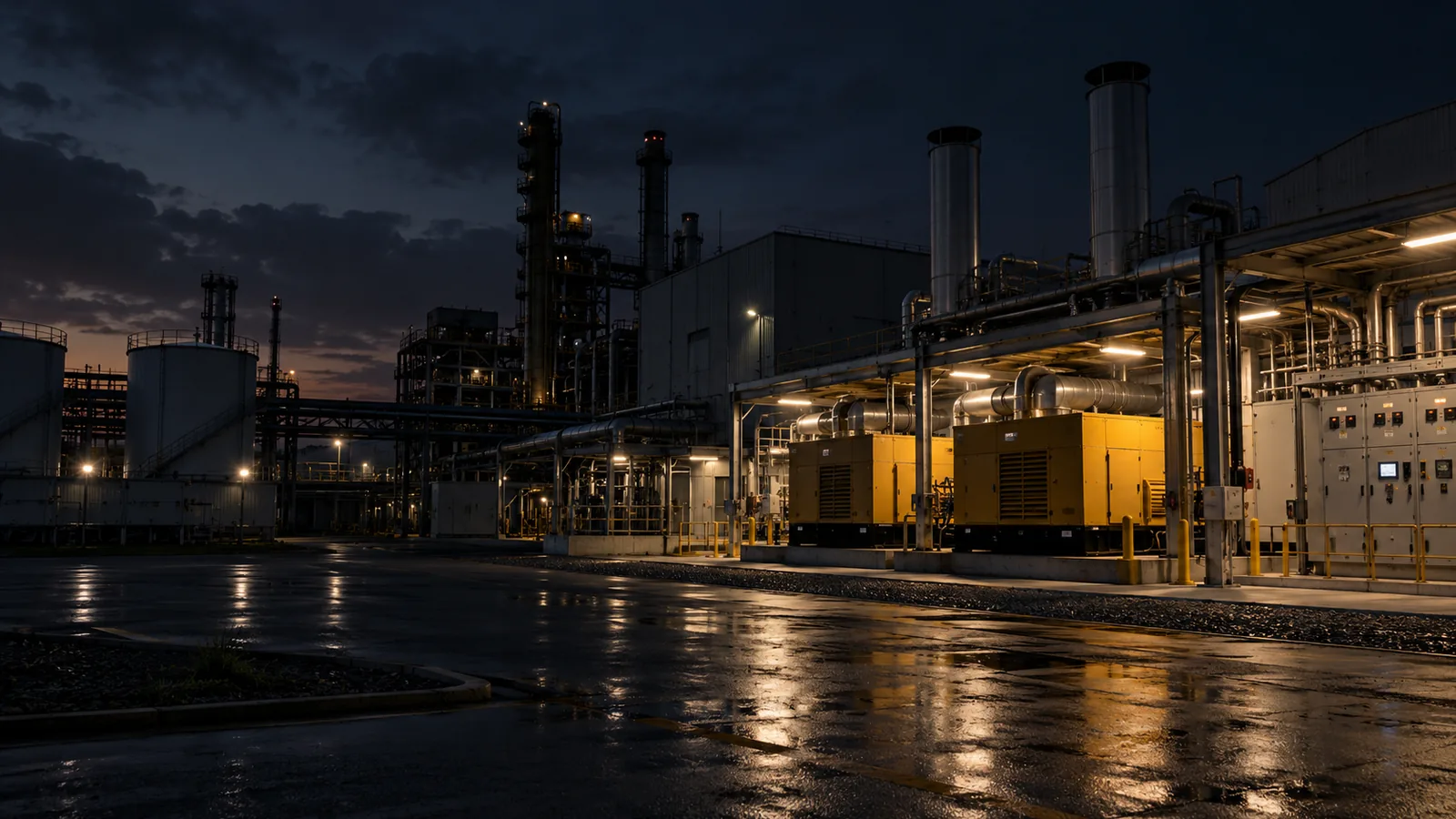
An emergency generator may operate only occasionally, but it needs to start reliably when required.
Routine testing helps confirm that:
Testing only the engine without checking the complete electrical transfer sequence may not reveal problems elsewhere in the emergency-power system.
Emergency generation depends on an adequate fuel supply.
The required storage depends on the expected operating period, site conditions and the consequences of losing backup power.
Plants also need to consider fuel quality, storage condition and replenishment during extended outages.
A generator with insufficient or degraded fuel provides little protection during a prolonged power failure.
Electrical backup systems are often treated as an electrical-engineering responsibility, but their purpose is closely connected to process safety and operations.
Operations teams need to understand which equipment remains available during a blackout and which equipment does not.
Shutdown procedures, emergency response and restart planning all depend on this information.
The electrical design therefore needs to reflect the actual process consequences of power loss.
A power failure does not affect every industrial plant in the same way.
In some facilities, the immediate requirement may be to keep control and safety systems alive.
In others, selected cooling, lubrication or utility systems may also need to remain operational.
Effective emergency-power design begins by identifying these critical functions and providing the right combination of generators, UPS systems, batteries and transfer arrangements.
The objective is not simply to restore electricity.
It is to ensure that the plant can respond safely and predictably when the normal supply disappears.