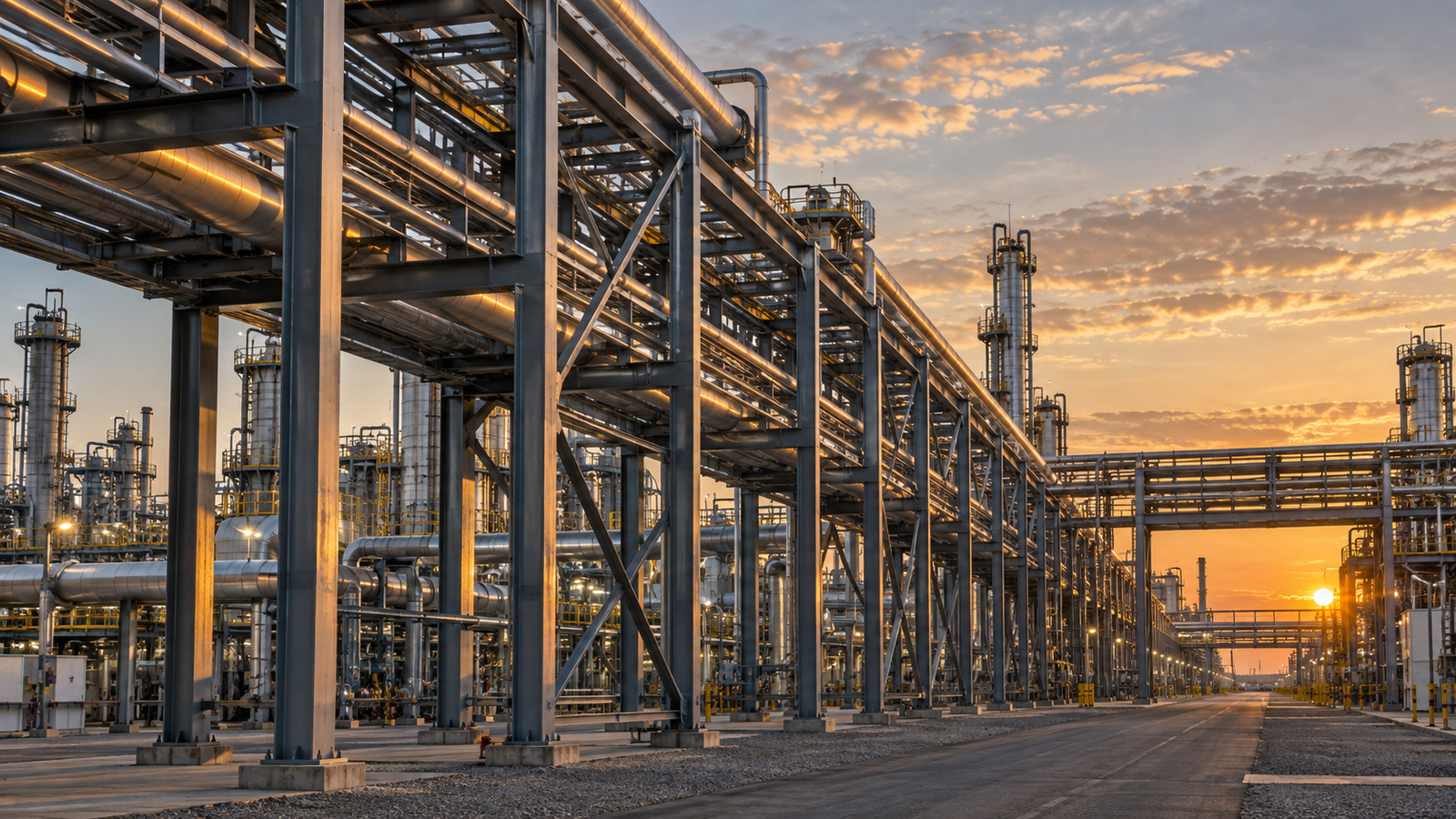
Pipe racks are among the most visible structural elements in industrial plants.
They carry process piping across units, but they often support much more than pipes.
Cable trays, utility lines, instrumentation routes and access systems may all depend on the same structure.
A pipe rack has to support the weight of piping, insulation, valves and other attached systems.
But that is only part of the problem.
Engineers may also need to consider:
This makes the pipe rack a multidisciplinary structure.
Process piping expands and contracts as temperature changes.
Those movements create forces at supports and guides.
The pipe rack therefore has to work together with the piping flexibility philosophy.
A structure that is too flexible can affect piping behaviour, while an overly rigid arrangement may increase loads elsewhere.
Industrial plants often change during their operating life.
New lines, cables or equipment may need to be added.
Where practical, pipe racks may therefore include allowance for future loading and space.
This can make later plant modifications much easier.
Pipe racks can become congested.
Maintenance and inspection access has to be considered during layout.
The arrangement should allow personnel to reach valves, instruments and cable systems where necessary.
Pipe racks often cross roads, equipment areas and other structures.
Clearance requirements, structural depth and piping elevations therefore have to be coordinated carefully.
Small layout decisions can have large downstream effects.
Pipe racks connect many parts of a plant physically.
A well-designed rack supports not only piping, but the broader movement of utilities, power and information through the facility.
That is why they are often described as part of the structural backbone of the plant.