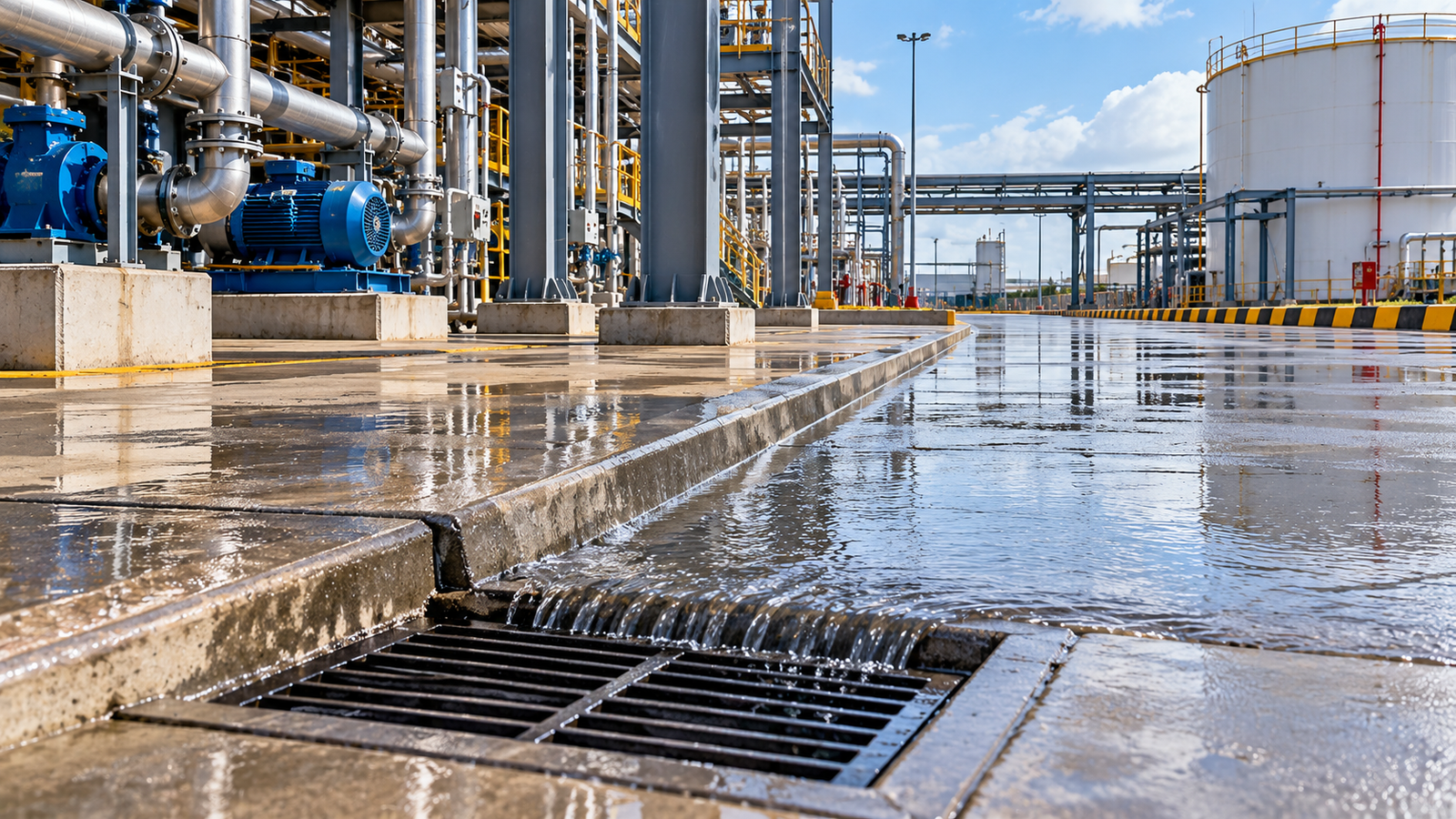
Industrial drainage systems rarely attract attention when they are working properly. But when drainage is inadequate, blocked or poorly designed, the impact can quickly spread across plant operations.
Water can accumulate around equipment, access routes can become unsafe, contaminated runoff can move into the wrong drainage system, and heavy rainfall can disrupt operating areas.
For this reason, industrial drainage is not simply a civil convenience. It forms part of the infrastructure that supports safe and reliable plant operation.
Not all water generated inside an industrial plant can be handled in the same way.
A facility may need to deal with:
The drainage arrangement depends on where the water originates and what it may contain.
Clean stormwater, for example, should generally not be mixed unnecessarily with drainage that may contain oil, chemicals or other contaminants.
Separating different drainage streams can reduce the load on treatment systems and help plants manage environmental risks more effectively.
One of the most fundamental parts of drainage design is the level and slope of the plant surface.
Roads, paved operating areas and equipment zones are normally graded so that water moves toward designated drains, channels or collection points rather than accumulating around equipment.
Small differences in elevation can significantly influence how water behaves during heavy rain.
Poor grading can create stagnant areas, flood access routes or direct runoff toward buildings and equipment foundations.
Because many industrial plants contain dense piping, foundations and structures, achieving effective drainage often requires close coordination between civil designers and other engineering disciplines.
Industrial drains may include open channels, covered trenches, underground piping and sumps.
These systems have to carry the expected flow, but they also need to be inspectable and maintainable.
Sediment, debris, corrosion products and process residues can gradually reduce drainage capacity.
If gratings cannot be removed easily or underground systems cannot be inspected, relatively small maintenance issues can remain unnoticed until drainage performance becomes poor.
Access for cleaning is therefore an important part of the original design.
Drainage around pumps, tanks, loading areas and process equipment can require special consideration.
Small leaks, maintenance activities or washdown operations may introduce liquids that should not enter a general stormwater system.
Floor slopes and local drains are often arranged to direct such liquids toward controlled collection systems.
Where equipment contains hydrocarbons or chemicals, drainage design also interacts with spill containment and loss-prevention requirements.
The objective is not simply to remove liquid quickly, but to move it to the correct destination.
Low points in drainage systems often discharge into sumps.
Sumps allow liquids to be collected before they are pumped, treated or transferred elsewhere.
Their reliability depends on more than the civil structure itself. Pumps, level instruments, alarms and electrical supplies may all be needed to prevent the sump from overflowing.
This makes drainage a multidisciplinary system involving civil, mechanical, electrical and instrumentation engineering.
Drainage systems are often tested most severely during intense rainfall.
A system that performs adequately during normal conditions may struggle when large volumes of water enter the plant in a short period.
Blocked drains, undersized channels or poorly graded surfaces can then lead to local flooding.
For plants in regions experiencing seasonal heavy rainfall, drainage capacity and routine cleaning become particularly important before the wet season begins.
Standing water can create several practical problems.
It can make walkways slippery, restrict access to equipment and accelerate deterioration of concrete or steelwork.
Persistent water around equipment foundations may also make inspection and maintenance more difficult.
In some locations, uncontrolled runoff can carry oil or contaminants across operating areas, increasing both safety and environmental concerns.
Good drainage therefore supports everyday housekeeping as well as plant reliability.
Drainage is easy to overlook because much of the infrastructure sits at ground level or below it.
But the system influences how a plant handles rainfall, maintenance water, spills and routine operating runoff.
Effective grading, segregation, collection and maintenance access help ensure that liquids move where they are intended to go.
For industrial plants, good drainage design is not simply about keeping the ground dry. It is part of creating an operating environment that remains safe, accessible and manageable under both normal and abnormal conditions.